You sold a card. Now comes the part where new sellers quietly lose their 5-star rating: packaging. A card bent in transit, a sleeve soaked by rain, a protector rattling loose inside an oversized envelope. It happens constantly and it is entirely preventable.
The stack below takes about two minutes to pack and scales with the card. For a fifty-cent common you finish in a padded mailer. For a slab-worthy chase card you finish in a box. The protection wrapped around the card itself is identical either way.
Build the Rigid Core
Two layers, and the order matters. First a rigid hard sleeve around the penny-sleeved card — a stiff plastic holder that keeps the card from bending or rubbing. Then that slides into a semi-rigid shipping protector, the thicker outer shell that grips the hard sleeve so it can't rattle and takes the actual impact. This pair is what every other layer is built around; skip it and nothing downstream — not tape, not bubble wrap, not even a box — will save a card from a flex.
Put the card in a soft penny sleeve before the hard sleeve, opening toward the closed end so it can't slip out. The soft sleeve stops the hard plastic edges from micro-scratching the surface — the exact flaw graders catch on arrival. The hard-sleeve pack below includes soft sleeves for this.
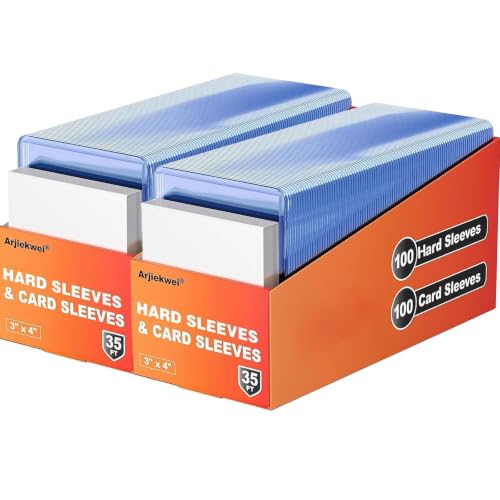
Stiff, crystal-clear slide-in holders sized for a standard card. The 35-point depth fits a penny-sleeved card with no room to shift, and the pack bundles the soft sleeves you need for the step above.
View on Amazon →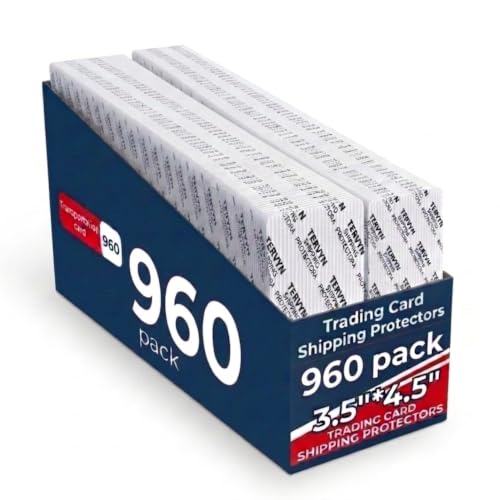
The hard-sleeved card slides into one of these. It holds the inner sleeve still, gives you a clean surface to tape, and won't shatter the way a thick toploader can under a hard knock. The 960-count pack drops the cost per card to a rounding error.
View on Amazon →Tape It Shut — With Painter's Tape, Not Packing Tape
The protector needs to stay closed and stay put, and the tool for that is blue painter's tape. The choice is deliberate: it grips firmly in the mail, tears by hand, and peels off clean. Packing tape or clear tape near a card is how buyers end up prying at your package with a blade and slicing the thing they paid for.
Run one short strip across the open end of the protector. You'll use a couple more further down to anchor it inside the pouch or the mailer so it can't slide around.
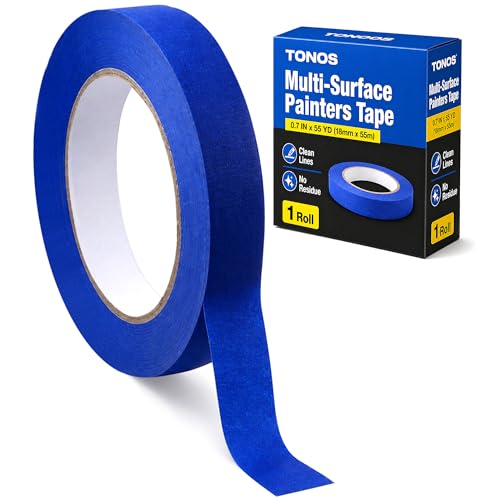
Narrow enough to seal a protector without shrink-wrapping the whole thing. Medium tack means it holds through transit and lifts off without tearing sleeves or leaving gum behind. One roll seals hundreds of packages.
View on Amazon →Wrap It in a Bubble Pouch
The protector stops bends. Bubble stops shock — the drop onto concrete, the bin that gets thrown, the parcel stacked on top of yours. Which form of bubble depends on the route: a padded mailer (Step 4a) is bubble-lined already, so for a cheap common that alone is enough. For a mid-value card, or anything headed into a box, wrap the protector in a dedicated bubble pouch first.
A 6 × 8 pouch swallows a carded single with room to fold the top over and tape it down. This is the layer sellers cut to save a few cents, and it is exactly why better cards still show up with dinged corners.
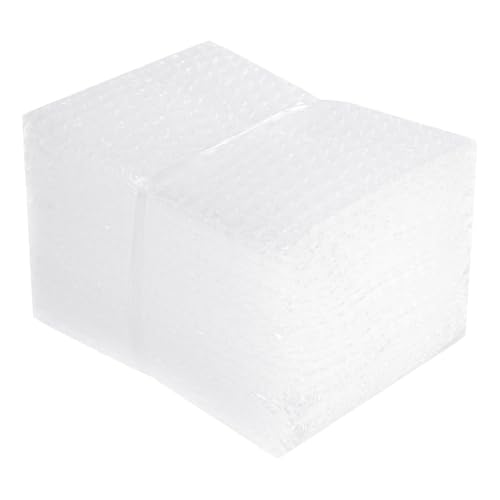
Bubble sleeves, not loose wrap. The carded card slides in, the top folds over, one strip of tape and the unit is cushioned on every side. Small enough that there's no slack for the card to travel inside.
View on Amazon →Pick the Outer Shell by What the Card Is Worth
This is the one real decision in the whole process. Everything up to here is the same for a bulk common and a $400 chase. The outside is where you spend based on risk.
Cheaper cards — a padded bubble mailer, nothing else. It's bubble-lined, so for a common the mailer plus the rigid protector from Step 1 is the whole job: taped protector straight in, peel, seal. Light enough to stay in the lowest postage bracket, and no bubble pouch needed.
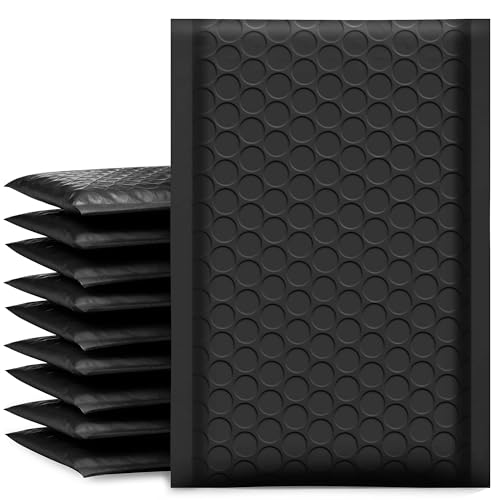
Bubble-wrap lined with a tear-resistant film outer and a peel-and-seal strip — no tape gun needed. For lower-value cards this is the whole outer layer; no separate pouch. Usable space runs about 4" × 7", which takes a card in a protector with room to seal.
View on Amazon →Expensive cards — a rigid box. A box can't be folded to fit a mailbox slot, can't be bent around other parcels, and reads to the carrier's machines as a package rather than a letter. The 9 × 6.5 × 2 size fits a bubble-wrapped card with fill packed around it. Postage runs a few dollars more; on a card worth real money that is the cheapest insurance you'll ever buy.
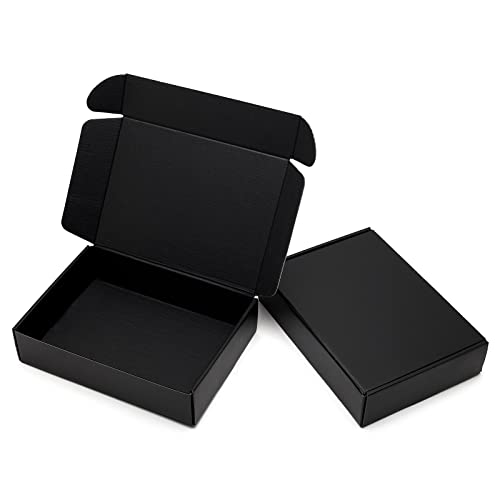
Small corrugated boxes sized for one carded card with fill around it. Black, so the outside doesn't advertise what's inside. Use these for anything over roughly $40–50, for graded slabs, and for any buyer worth keeping.
View on Amazon →A box does nothing for a card that rattles. Keep the bubble pouch on, then pack crumpled paper or a foam sheet around it so it can't move. The card should sit suspended in the middle, touching nothing hard.
Mark It Fragile
A fragile sticker won't force anyone to be gentle, but handlers do tend to treat a marked package more carefully, and it costs cents. Put two or three on different faces. It also tells the buyer, before they've opened anything, that you packed with care.
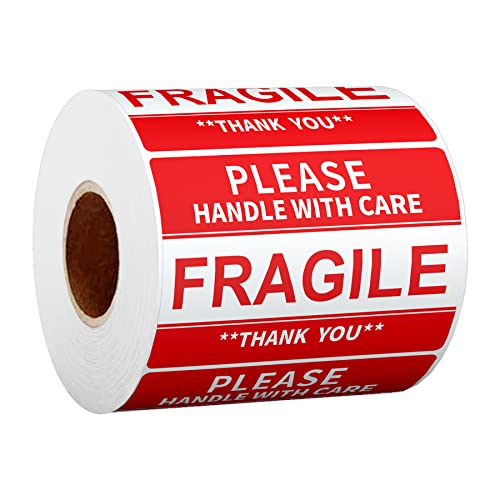
Bright, legible, and big enough to actually register on a sorting belt. One on the front, one on the back, one on an edge. A roll lasts months.
View on Amazon →Your Two-Minute Packing Checklist
- Penny sleeve the card, slide it into a rigid hard sleeve, then slide that into a 3.5×4.5 shipping protector
- One strip of painter's tape across the open end — never packing tape near the card
- Cheaper card → taped protector straight into a 4×8 padded bubble mailer, no pouch. Peel and seal, done
- Mid-value or box-bound → wrap the protector in a 6×8 bubble pouch first, fold, tape
- Expensive card or slab → the pouched protector into a 9×6.5×2 box with paper or foam fill so nothing rattles
- Two or three "Fragile" stickers on different faces
- Mailer route ships in the cheapest tier; the box route runs a few dollars but is worth it above about $40–50
That's the whole system. Five parts, a couple of minutes per package, and the same protection wrapped around the card whether it cost fifty cents or five hundred dollars. The buyer opens something that was clearly packed by someone who has done this before — and that is the difference between one sale and a regular.
Every product above is sold in bulk. Buy the big packs: the per-unit cost collapses and you'll use all of them.